There’s a silent epidemic in B2B marketing: the boring case study.
You’ve seen it. You’ve probably published it.
A predictable, templated PDF that outlines the “challenge,” the “solution,” and the “results”—with maybe a quote and a few metrics thrown in for good measure.
It checks a box. It follows a format. And it fails to move anyone.
If you’re trying to win trust, stand out in a crowded market, and arm your sales team with real influence, you need to rethink the entire approach. Because the standard case study isn’t doing the job.
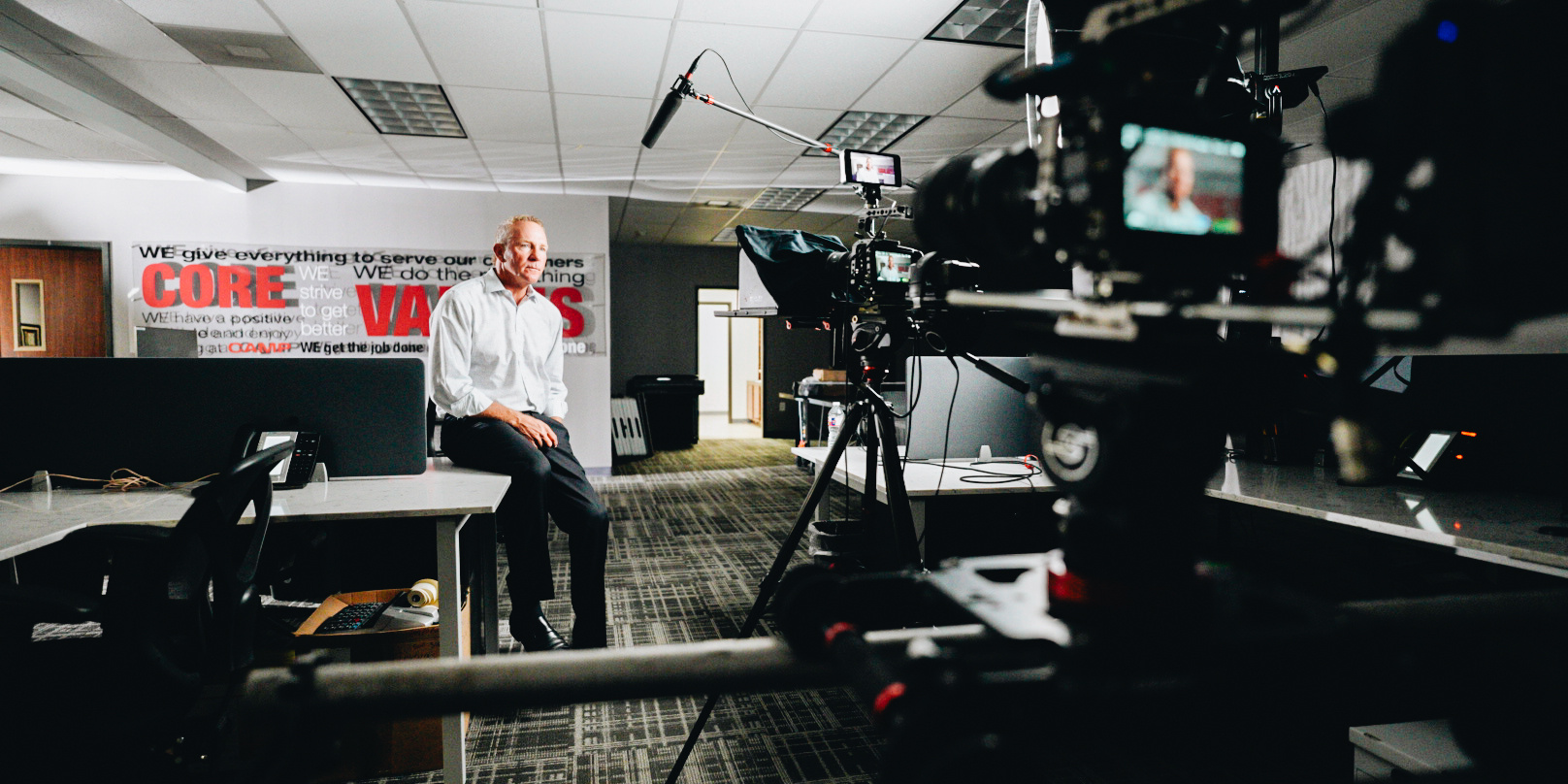
The modern buyer doesn’t want a report. They want a story (watch the full episode).
The Problem With Traditional Case Studies
Let’s start with the obvious: most case studies are written for internal approval, not actual prospects.
They’re riddled with brand-first language, product jargon, and cherry-picked stats designed to make the company look good. You can practically hear the ghost of a sales deck narrating them.
But here’s the truth: your prospect doesn’t care about your product’s specs or your internal milestones. They care about their own problem, their own pressure, and whether or not you’ve actually helped someone like them solve it.
That’s where traditional case studies fall short. They’re not written for prospects. They’re written for executive approval.
They read like success spreadsheets instead of transformation stories. And that’s a missed opportunity.
Because what your buyers actually need isn’t documentation. It’s belief.
Why Case Stories Work Better
A case story flips the script.
It’s not about you. It’s about them—your customer. Their pain. Their journey. Their transformation.
It invites the reader (or viewer) into a real-world scenario with emotional stakes, obstacles, doubt, and ultimately, change. It’s relatable. It's believable. It's REAL. It feels like something your prospect could live through too.
That’s the key: it creates empathy before it creates interest.
And in B2B, where deals are complex and trust is hard-won, empathy is your competitive advantage.
The best case stories create a moment of recognition. Your buyer sees the same pressures. The same symptoms. The same indecision. And then—they see a way forward.
Not because you told them, but because someone like them showed them.
The Case Story Formula
So how do you actually build one?
It’s not complicated. But it does require a shift in mindset—from self-promotion to storytelling.
Here’s a simplified structure:
1. Start with the Stakes
Don’t open with your company. Open with the customer's world. What problem were they facing? Why did it matter? What was at risk if it didn’t get fixed?
This is where most case studies fumble. They gloss over the tension and jump straight to “we delivered X in Y weeks.”
But your buyer needs to feel the urgency before they care about the solution.
2. Describe the Journey
What had the customer tried before? What didn’t work? How long were they stuck? How did they find you—and why did they pick you?
This part matters more than most people think. Because it mirrors the buyer’s own uncertainty. They’re likely evaluating multiple options. Hearing how others made their decision helps them make theirs.
3. Show the Experience
Now’s the time to talk about how you helped—but from the customer’s point of view.
What was onboarding like? What surprised them? What hiccups came up along the way, and how did you respond?
Honesty builds credibility. And specificity builds trust.
4. Reveal the Transformation
What’s different now? What changed in their business? What do they say about the impact? Did it affect team morale, efficiency, revenue?
Metrics are fine—but human outcomes are better.
Try to capture both. But make sure it’s clear that the customer is the hero. You just helped them win the day.
5. End With Resonance
Close with a reflection: What would this customer say to others in the same boat? What advice would they give? What’s next for them?
You’re not just providing proof. You’re planting a vision.
And if your prospect sees themselves in that future? You’ve already won.
From One Story to a Strategy
One case story is great. But the real power comes from building a library of them.
Because your buyer in healthcare doesn’t care about a story from logistics. And your mid-market ops leader doesn’t relate to a billion-dollar enterprise CTO.
Each story needs to match a market segment, persona, or use case. That’s how you create resonance at scale.
So don’t stop at one. Build them quarterly. Monthly, if you can.
Over time, you’ll have a deep bench of stories that reflect your best work across industries, roles, and pain points. And when a new prospect comes in, you can say: “Let me show you someone just like you.”
Sales Enablement Gold
Let’s be blunt: your sales team is probably tired of pushing decks.
A great case story—delivered before a call, dropped into a nurture email, or played during a demo—does more than any slide ever could.
It softens objections. It builds belief. It gives your reps real-world language and credibility they can lean on.
And when the story is told by a customer, not a sales rep, it bypasses the natural skepticism buyers have toward vendors. They stop thinking “you’re trying to sell me” and start thinking “this might actually work.”
That shift? It changes everything.
Final Word
The case study isn’t dead. It’s just outdated.
In a world of infinite content and shrinking attention spans, proof needs to feel personal. It needs to look like your prospect’s world. It needs to sound like a peer, not a pitch.
That’s what a case story delivers.
So next time you think about creating “proof” content, skip the PDF. Skip the bullet points.
Tell a story worth believing.
Because that’s how trust is built—and how deals get done.