Modular Video Content: The Gateway To Video ROI
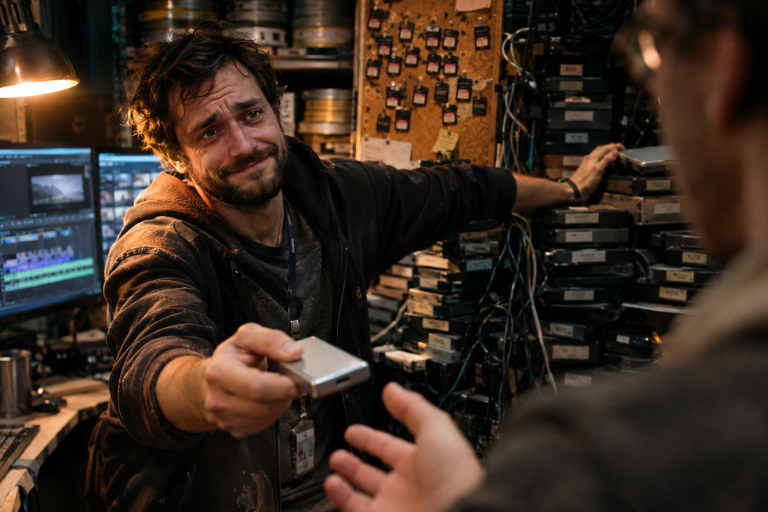
Your last video shoot probably produced two hours of usable footage and one four-minute video. One line in your editor's brief decided what happened to the rest, and it's the easiest line in the whole project to change.
You commission a video for a campaign, your website, or an upcoming event. The shoot goes well, the editor delivers a polished final video, and your team is happy with it.
Then another need comes up. Sales wants a clip that explains a product. HR needs footage for recruiting. Marketing wants to show a part of the business that didn’t make the final cut.
You know the crew filmed more than what ended up in the final video. But what else is available? Where is it? Could you use it without booking another shoot?
Here’s an example of what that can look like for a manufacturing company.
The team books a full day at one of its production facilities. Three executives sit down for interviews. A crew follows the product from raw material to finished goods, station by station. By the end of the day, they have about six hours of footage.
Four minutes make it into the final capabilities video. Everyone loves it. But what about the remaining hours of usable footage could have become a library of content for sales, recruiting, training, and future campaigns?
During review, someone asks: “For this production stage, the edit shows three clips. What else did you get?”
The answer: 10 to 20 usable clips from that stage alone, shot from different angles and showing different parts of the work.
Then comes the question that matters: “Do we have that for every stage?”
They did. They just didn’t know it, because nobody had asked the editor to keep it. That decision comes down to a single directive given to the editor, and it can make the difference between getting one video and building a library your team can use for years.
If you want to hear a deeper discussion of this topic, watch “The One-Video Trap in B2B” on the Content Wars Podcast.
Key takeaways
- Modular editing turns usable interview comments and B-roll into a color-graded library before the editor builds the final video.
- In this example, a full-day shoot produced about two hours of usable footage across over 400 clips, while the finished video used about four minutes.
- Asking for modular editing after a project ends can mean reviewing every file again and paying for that work twice. Put it in your initial brief.
- A modular library makes it easier to swap a shot or comment without rebuilding the edit from scratch.
- Measure a shoot by how much usable footage your team can find and reuse, not just by how many finished videos it produced.
The most expensive decision in your video project happens after the shoot
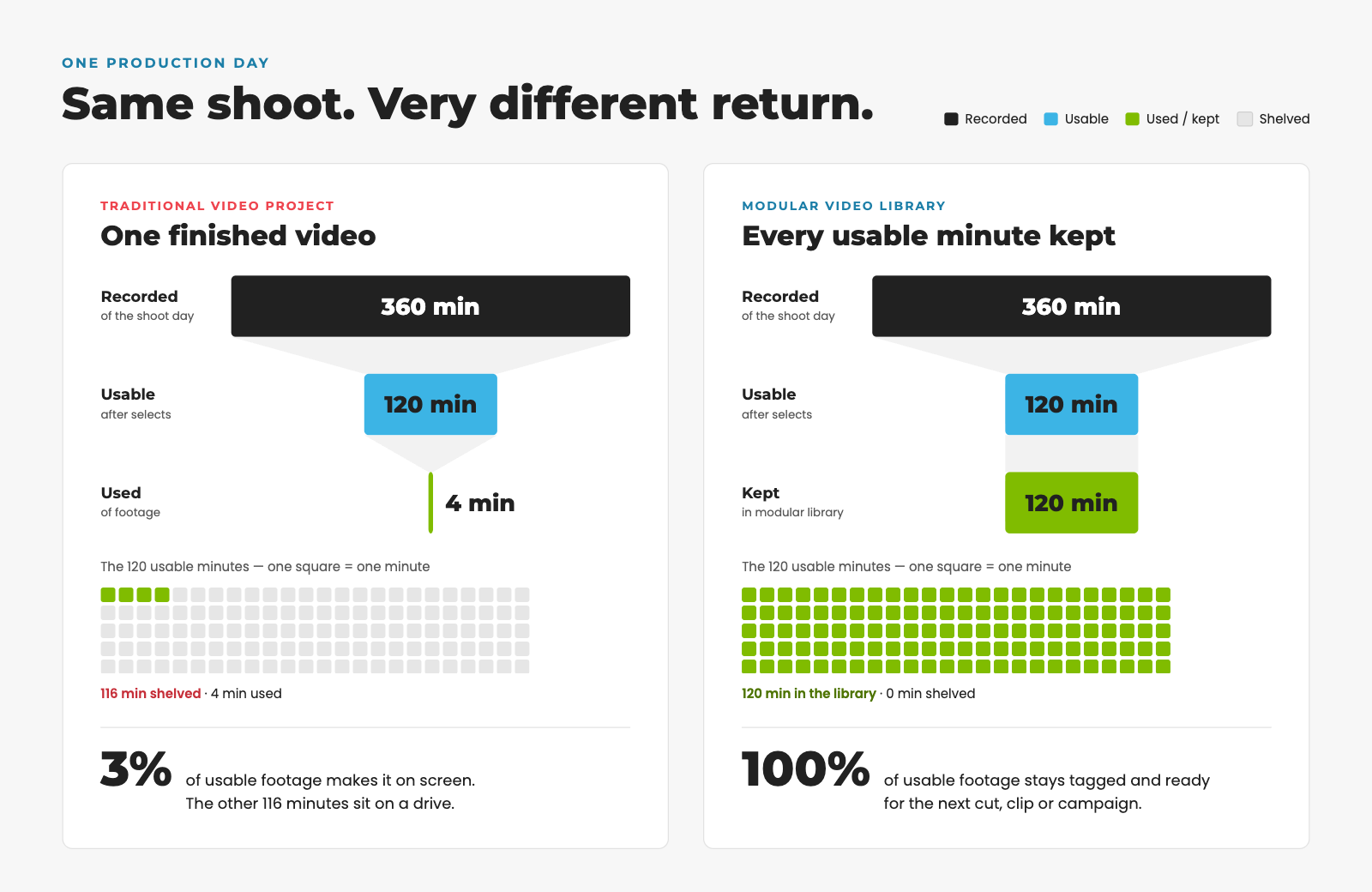
Run the math on that plant visit. Six hours of footage is 360 minutes.
Not all of it is usable. Interviews may yield somewhere between 30% and 50% usable material, depending on the speaker. Process footage loses the moments before the action starts and after it ends, along with shots that are out of focus or interrupted. In this example, roughly a third of the footage is usable: about two hours.
The final video used four minutes.
That leaves about 116 minutes of usable footage outside the finished edit. The editor saw it. Your team may not even know it exists.
Consider what went into capturing it. Three senior leaders gave up part of their day. A production floor worked around a camera crew. Someone on your team spent weeks planning, scheduling, and getting approvals. Those costs were the same whether the edit kept four minutes or 120.
Then, six months later, sales asks for a clip showing how a part gets finished. HR wants a facility overview for new hires. Marketing wants a post about the new production line. And the company books another shoot to capture footage it already paid to capture once.
Why editors are trained to throw footage away
This isn’t the editor’s fault. They’re following a process built for a different kind of video.
Think about a polished 30-second ad. Every movement is planned. An actor walks from point A to point B six times over two hours because the take has to be right. The editor uses one version and discards the rest. That’s part of the job.
The problem is applying the same approach to footage that works differently. When you interview executives or subject matter experts, or film your operations, the footage isn’t scripted. The extra material isn’t five failed takes of the same walk. It’s different thoughts, explanations, stations, and angles. Any one of them could carry a message on its own.
The way people consume content has changed, too. Ten or fifteen years ago, one video might cover the need: play it at a trade show, put it on the website, and move on. Today, buyers spend time on social and content platforms, not just on your website. Every usable clip could be another point of contact with them. The traditional production model wasn’t built for that.
Most production companies are set up to deliver the video you asked for. Ask what else you have, and the conversation can quickly become about a new scope and a new quote.
What is modular content in video production?
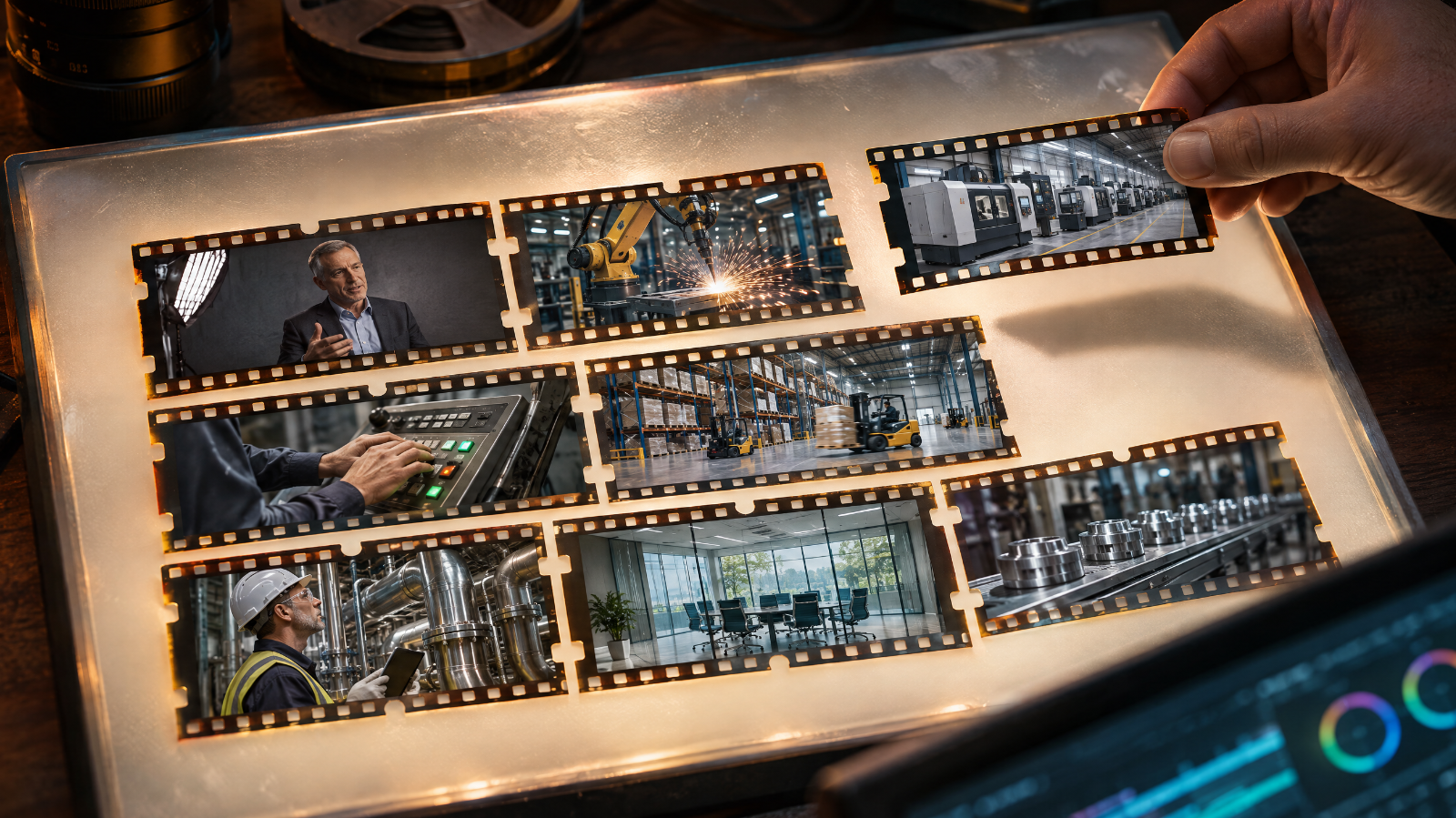
Modular content in video production means editing raw footage into a library of ready-to-use pieces before building a single finished video. Clear interview comments and usable B-roll are trimmed, color graded, and organized by topic so they can support the current project and future ones.
Two terms are worth defining. B-roll is supporting footage that shows what someone is talking about: a machine running, a product moving down the line, or a team at work. Color grading adjusts color and exposure so clips look consistent and finished.
You still get your final video. The difference is that the editor builds it from a library of prepared pieces instead of selecting a few clips from a pile and leaving the rest behind. The video you need today is one arrangement of those pieces. Future assets can be built from other combinations.
That’s also why modular content is different from repurposing. Repurposing usually means cutting a finished video into shorter pieces, which limits you to the material that made the final edit. Modular editing starts with the original footage and keeps the usable material before the first video is built.
The two options given to the editor, side by side
Everything before the edit can be identical: the planning, crew, and shoot day. The difference is the instruction the editor gets when the footage comes back.
| Traditional Edit Brief Vs. Modular Video Brief | ||
| The instruction | “Make a 2- to 3-minute video that tells this story.” | “Before building the video, pull and prepare every usable piece.” |
| Interviews | The editor finds comments that fit the planned story. | Every clear, complete thought is clipped and saved. |
| B-roll | The editor selects a few clips per scene. | Every usable clip is trimmed and kept. |
| Color grading | Applied to clips in the final cut. | Applied to all clips in the library. |
| What you receive | One video. | One video plus a library of reusable clips. |
| Changing a shot later | A new edit request, often with a new quote. | Swap in another clip from the library. |
| Who sees the extra footage | The editor. | Your whole team. |
What this looks like in practice
Define the editing approach and deliverables before anyone picks up a camera
Agree on the editing instruction before the shoot, because it affects the scope and budget. Put it in writing and include it in your video production scope instead of trying to add it later.
A workable version might read:
Before building the final video, clip every usable interview comment and B-roll shot. Trim each clip, color grade the usable footage, and organize it by topic or area. Then build the final video from that library.
The interview pass
The editor reviews every interview and pulls out comments that can stand on their own: clear, complete thoughts and arguments. That doesn’t mean side conversations, false starts, or moments when someone is searching for what to say.
This pass can help with the current video, too. In the plant example, the team could review comments grouped by topic and check whether anyone had covered a particular capability before locking the story. It’s much harder to spot a missing point when you only see the handful of quotes selected for the first edit.
The B-roll pass
The editor prepares each usable shot by trimming the footage before the action starts and after it ends. Anything out of focus or interrupted gets removed. The remaining clips are color graded and kept in the library.
Organize it so people who aren’t editors can use it
Nobody on your team is going to review six hours of raw footage. The files are large, and the footage is too hard to scan. The library needs to be grouped in a way your team already thinks: by station, area, product, process, or topic.
A marketer should be able to open “paint booth” and see the usable clips from that part of the facility.
Where the library lives matters as much as what’s in it. Footage that’s saved but hard to find is lost all over again. That’s why it’s worth setting up a library your team can actually search.
Build the video from the library
Once the library is ready, the editor builds the final video from it. In the plant example, the client could move pieces around, add a station, remove a comment, and swap shots until the video showed the facility the way they wanted.
No one had to ask whether other footage existed. They could see it.
If you need a better way to store your video library, take a look at Vysual.
How to tell it’s working
Track what the library makes possible:
- Library yield: How much usable footage made it into the library? In this example, the traditional edit used about 3% of the usable footage. A modular brief aims to keep nearly all of it.
- Reuse rate: How many clips are published or used again within 90 days of the shoot?
- Time to the next asset: How long does it take to produce another piece of content once someone asks for it?
- Reshoots avoided: How many requests were handled with existing footage instead of a new shoot?
- Sales usage: How often do clips show up in sales follow-ups, proposals, and pipeline conversations?
“Finished videos delivered” doesn’t tell the whole story. It counts the four minutes and ignores the two hours.
Can’t we just ask for this after the project is done?
In theory, yes. In practice, modular editing after the project ends means starting much of the edit over. The editor has to review every file, pull out the usable pieces, and prepare them for the library. That work takes time, and will be viewed as a new edit.
Some production companies may not offer it at all. It sits outside their process, so the conversation goes back to the next video and the next quote. There’s also the question of who owns the footage. Unless you negotiated it up front, your contract may cover the final video but not the raw files. Some vendors don’t keep those files. Before your next project, find out who actually owns the footage from your shoot.
The other concern is cost. Modular editing does add effort. But it’s most efficient while the editor is already reviewing the footage for the first video, not months later when the files have gone cold. You’ve already paid for the crew, travel, shoot day, and your executives’ time. The modular pass adds editing work, but it can turn that investment into a library instead of a single asset.
The value is already on the cards
The expensive part of a B2B video happens on shoot day. By the end of it, your leaders have shared their expertise and your operations have been filmed from multiple angles. The remaining question is whether the edit preserves that value or leaves most of it unused.
If your last shoot produced one video, ask your vendor what happened to the rest of the usable footage. If the answer is “nothing” or “we’d have to quote that,” you know what to change. Add the instruction to your next brief, whether you work with your current vendor or build an ongoing video partnership.
One instruction to the editor can make the difference between paying for a video and building a library.
Frequently asked questions
What is modular content in marketing?
Modular content means creating reusable pieces that can be assembled into different assets for different channels and audiences. In video, those pieces are interview clips and B-roll shots edited and organized so they can be used in more than one finished video. The goal is to create content once and assemble it in different ways.
What’s the difference between modular content and repurposing?
Repurposing usually starts with a finished asset and cuts it into smaller pieces. That limits you to what made the final edit. Modular editing starts with the original footage and keeps every usable piece before the first video is built. In this example, that means working from about two hours of usable footage instead of four minutes.
What is B-roll footage?
B-roll is supporting footage that shows what an interview subject is describing, such as equipment running, products in production, or people at work. A single useful clip can illustrate a social post, sales presentation, or future video. In a modular edit, usable B-roll is trimmed, color graded, and saved in the library.
Does modular editing cost more than traditional editing?
It takes more editing time because the editor prepares all the usable footage, not just the clips in the final video. Include it in the original scope rather than adding it after the project, when the files may need to be reviewed all over again. Then compare the added editing cost with the cost of reshooting footage you already captured.