How To Build A Video Production Scope That Works
Marketing teams usually describe video projects by the number videos, or days of production, but those factors are only a fraction of what determines the cost of a video project. Every detail can swing the cost, sometimes wildly. Leave details out of your request, and many times, decisions will be made without you knowing. This post seeks to explore the factors that impact cost and give you the knowledge to decide what's right for your next production.
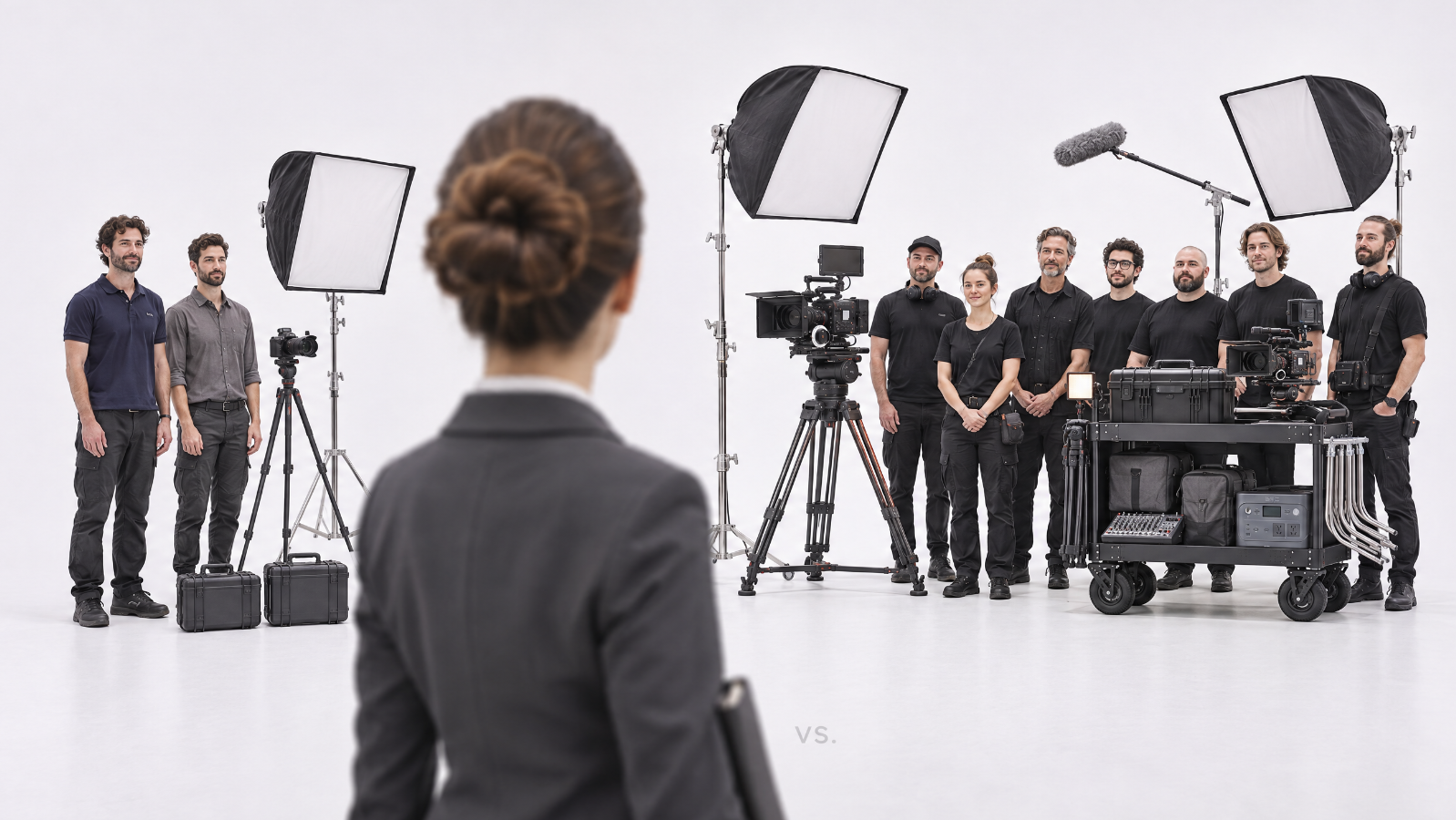
“We have a training coming up. It’s one day and we need 3 videos. How much would that cost?”
Production companies hear some version of this all the time, and from the marketing side it sounds clear. There’s an event. It lasts a day. You want three videos.
The problem is that this request isn’t a clear video production scope of work. It could honestly be quoted at $2,000 or $20,000, because it describes the shoot and says nothing about how you want it executed, and that the expectation is for the deliverables.
This is for marketing leaders who commission video a few times a year and keep receiving quotes, or finished videos, that don’t match what they pictured.
If you want to listen to a deep dive on the topic, watch “This Is Killing Your Video Projects” on the Content Wars Podcast.
Why “film our event” isn’t a scope
Marketing teams usually describe video projects by the deliverables: one video, or by the production day: one day, one location, one event. But the shear quantity of videos and the shoot day aren't the sole drivers of cost or quality.
One company asked for a price to film its one-day training. When we asked how the footage would be used, the real project came out. The goal was to turn a live training into an on-demand series that new hires could watch on their own. The day was made up of ten separate 3 camera recording sessions, each running 30 to 60 minutes.
That’s ten 3 camera, long-form videos, each with its own edit. The post-production work alone between “a video from training day” and “ten 30-to-60-minute episodes from 3 different angles” is a completely different production setup and ten times more post-production. Two vendors could each quote “a one-day training shoot” and be pricing completely different jobs.
Define the video deliverable before the shoot day
A useful scope starts at the end. What result do you need, and what does success look like when it’s done?
In the training example, picturing the actual viewer changed the project again. People in the live room have context. They know why they’re there and what they’re supposed to take away. A new hire watching session four on a laptop six months later has none of that. So the series needed an introduction explaining what the training covers and why it matters, plus a closing that recaps what viewers should have learned and tells them who to contact with questions.
Ten videos became twelve, and the goal required every one of them. Because the additions were planned before anything was shot, they barely moved the budget. The crew brought a teleprompter, the presenter read about two minutes of script at the start and end of the day, and the edit picked up a modest amount of extra work. The production cost didn’t change.
The small choices that quietly multiply cost
Some decisions feel trivial to a marketing team and enormous to a production team. In the same project, whether the presentation slides should appear as static images or animated graphics didn’t seem like a big deal to the client.
Across ten episodes that each run past 30 minutes, it’s a very big deal. Animation at that volume is a huge amount of work, which means a lot of cost. If one vendor assumes animation and another assumes static slides, their quotes will land far apart, and neither will be wrong.
That’s the hidden cost of a thin scope. When you don’t make the choices, vendors make them for you, and you find out which ones they made when the invoice or the final cut arrives.
Decide before the cameras turn on
The most expensive moment to realize you need something is after the shoot. Had the intro and closing come up after filming, the crew would have had to come back. A two-minute addition turns into a second production, and most teams respond by deciding they don’t need it that badly, so it never gets produced. The training series ships, and it’s worse than it should have been.
What a scope of work should answer
You don’t need to understand cameras, lenses, or crew sizes to write a strong scope. You need to answer the questions only your team can: What should the video accomplish? Who will watch it, and where? How many pieces do you need, and about how long should each be? What should they look and feel like? What needs to be communicated, who should appear on camera, what should viewers see, and where can filming happen?
It’s fair to say that marketing teams aren’t video production experts. That’s why you shouldn’t have to scope the project alone. Bring your answers to a production partner and work through the remaining decisions together. A good partner will ask the questions you may not have considered, such as whether a training series needs an introduction.
Your team doesn’t need to map out every production detail. It needs to explain what you want the videos to accomplish and how they’ll be used. From there, you and your production partner can make the right choices for a successful project.