How to Choose a Video Production Company
Collecting three quotes and picking the most reasonable one feels like due diligence, but video isn’t a commodity, and vague requests produce quotes built on completely different assumptions. The better test is how a vendor behaves before it names a price: what it asks, what it recommends, and whether it’s honest when your budget doesn’t fit. This post explains how to turn the bidding process into a real evaluation and when a freelancer makes more sense than a full crew. You’ll finish with a clearer way to separate genuine partners from vendors who are simply guessing.
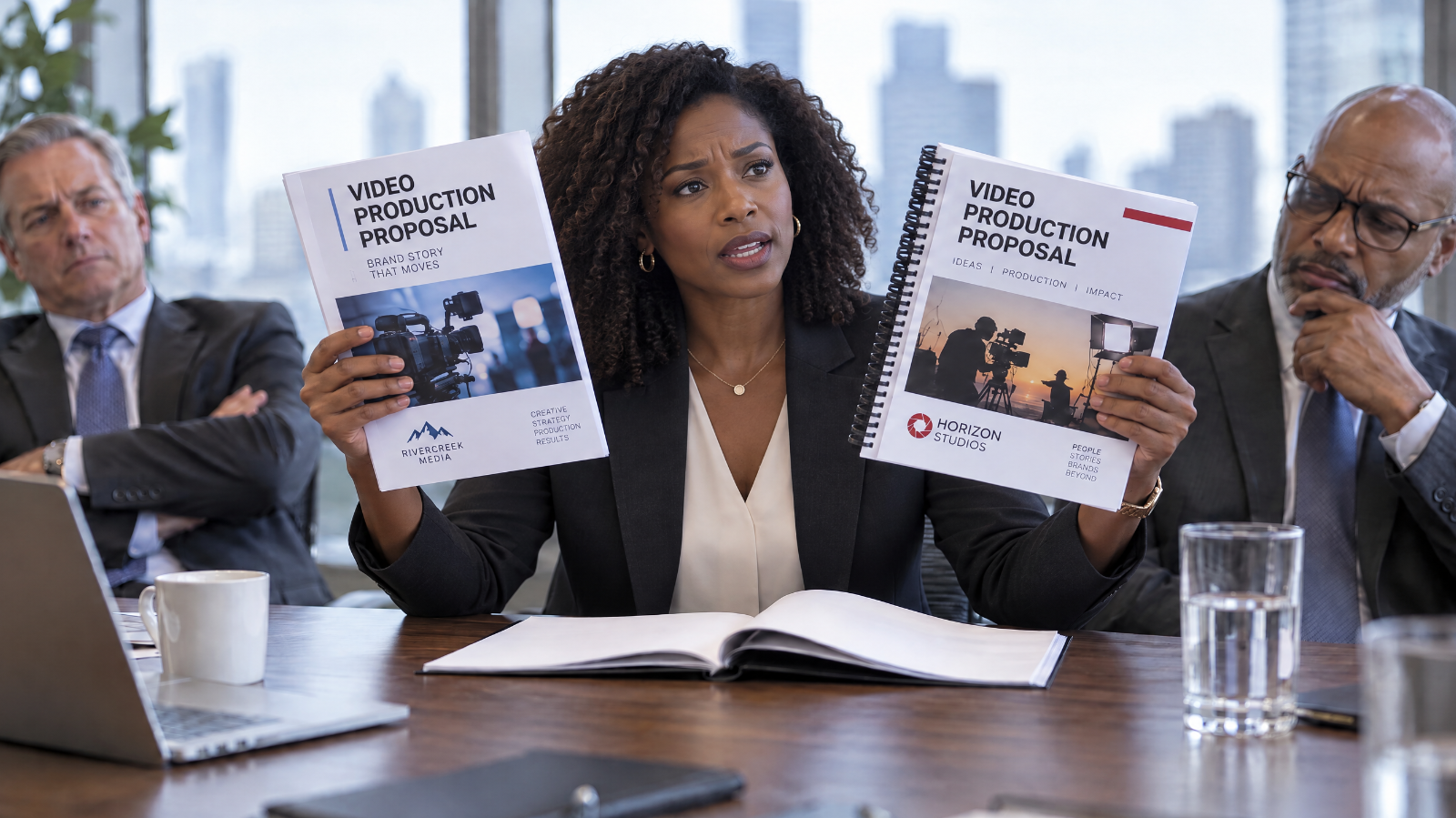
Your marketing team needs a video, so you do the responsible thing: contact three production companies, describe the project, and ask for quotes.
One comes back at $5,000. Another at $15,000. The third at $30,000.
The $30,000 quote looks absurd. If someone says they can do it for $5,000, why pay six times more?
The reality is that the three companies didn’t quote the project the same. They couldn’t: you gave them a loose description, and each company filled in the blanks differently. If you’re trying to figure out how to choose a video production company, the price may be the least useful information in front of you.
This is for marketing and growth leaders who hire video by the project—and have chosen what seemed to be a sensible-looking bid only to be surprised by the result.
If you want to listen to a deep dive on the topic, watch “This Is Killing Your Video Projects” on the Content Wars Podcast.
Why three video production quotes rarely compare
The three-bid process works well for commodities. If you’re buying 500 office chairs, you can compare similar products and let price help make the decision.
Video is different. Every production involves decisions about equipment, lighting, location, crew, talent, creative approach, and editing. When your brief leaves those details open, each company makes its own assumptions.
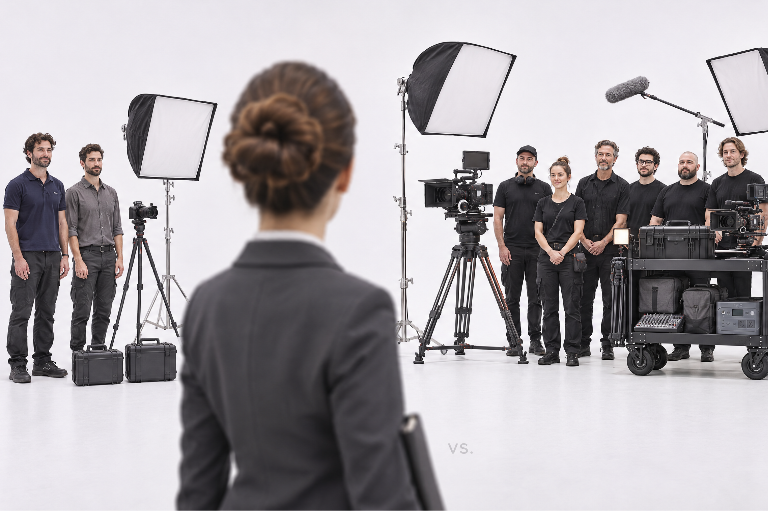
The $5,000 company may picture a one-person crew and a single edit. The $30,000 company may picture a larger crew, multiple days of production, several deliverables, and animated graphics. Both may be responding to the same request—but they’re pricing different projects.
Three quotes built on three sets of assumptions are three different projects with prices attached.
A quote based on guesses can create problems later
The trouble often starts after you choose a vendor. The scope they assumed collides with the scope you had in mind. The price may climb once the actual requirements come to light. Or the finished video may simply miss what you expected.
It’s tempting to put all the blame on the production company, and sometimes that’s fair. A good partner should ask the hard questions before quoting. But if your process rewards the lowest quote instead of the most defined, you may be encouraging vendors to guess.
How to evaluate a video production company
Pay attention to how a company behaves before it gives you a price. A strong partner asks how the video will be used, who will watch it, and what it needs to accomplish. Then they recommend options based on your answers.
Notice whether the vendor brings useful ideas you hadn’t considered. One company asked us for a price to film a full-day training. We asked how the footage would be used and learned it was meant to become an onboarding series. We were able to recommend adding a short scripted introduction and closing so new hires watching later would understand the context. That recommendation came from a conversation, not an RFP.
Pay attention to how the production company talks about your budget, too. A good partner will tell you when the ideal version doesn’t fit—and explain which changes could bring it into range. A vendor that agrees to everything without discussing tradeoffs may be telling you what you want to hear.
When is a freelance videographer the right call?
A freelance videographer can be the right choice for some projects. For behind-the-scenes footage or event documentation where no single moment is critical, one skilled person with a camera may be all you need.
The requirements change when the video needs to deliver a specific message to buyers and meet a particular standard for image, sound, and pacing. Depending on the project, planning, production, and post-production may call for different skills and people. If the video carries real business weight, look for a team with the experience and capacity to handle the work, not just a camera operator.
Keep the three bids. Change what you’re comparing.
If your procurement process requires multiple bids, you don’t have to fight it. Change what the bids are measuring.
Give each company the same business goal, audience, budget range, and project details. Then pay attention to how each one guides the conversation. Do they clarify what’s missing? Explain the tradeoffs? Recommend an approach that fits your goals and constraints?
You’ll see which companies are scoping the work and which are guessing. The conversation becomes part of the evaluation, and the quotes that follow have a better chance of describing comparable projects.
When you’re done, you should be able to answer one question about each company: are they interested in helping your project succeed, or simply in selling you a video and moving onto the next one?